Loading...
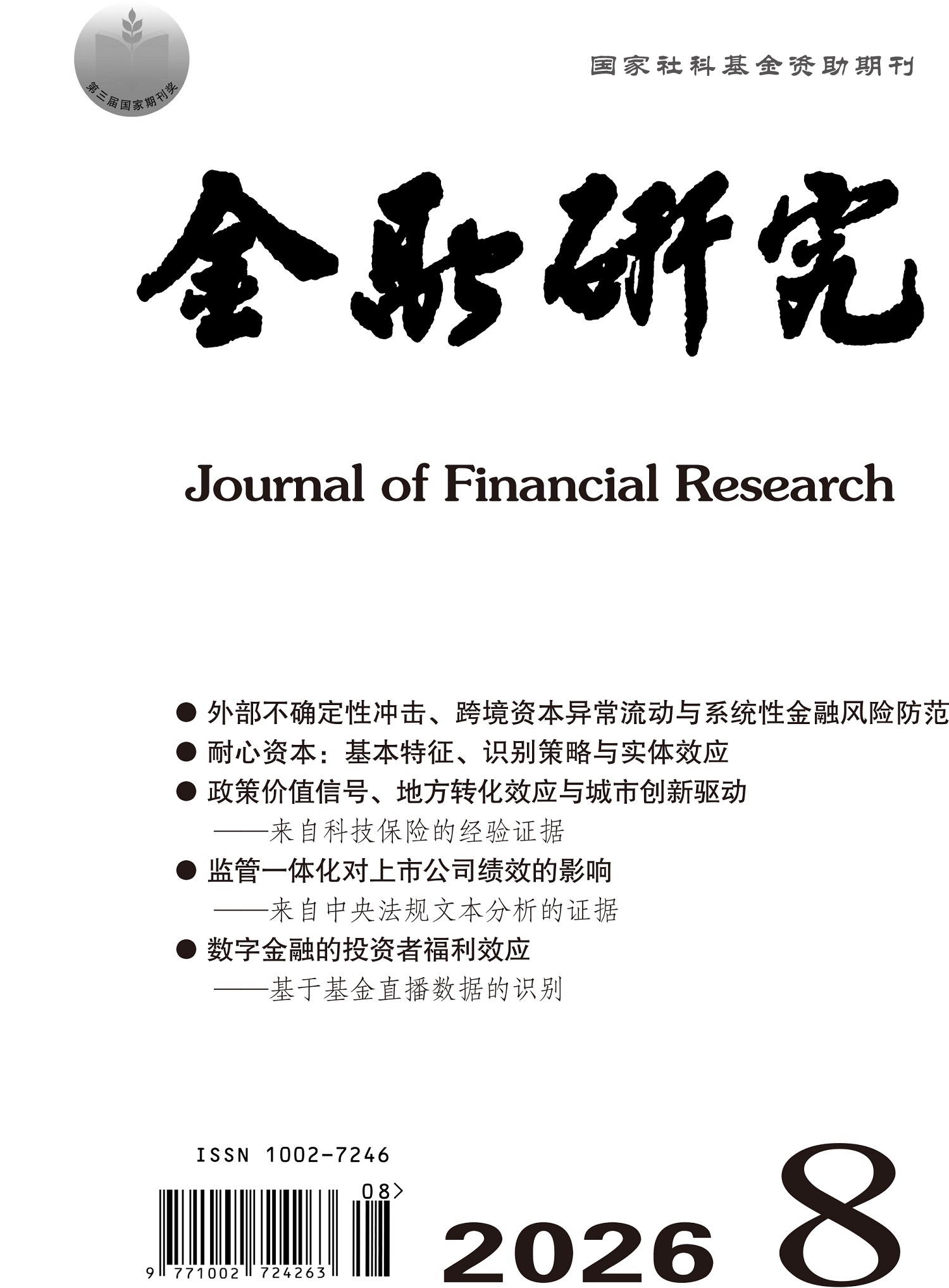
Cover Illustration
2026, Vol.554 No.8
Table of Content
25 August 2026, Volume 554 Issue 8
Previous Issue
For Selected:
View Abstracts
Download Citations
EndNote
Reference Manager
ProCite
BibTeX
RefWorks
Toggle Thumbnails
Select
External Uncertainty Shocks, Abnormal Cross-Border Capital Flows and Systemic Financial Risk Prevention
Collect
DENG Chuang, WU Jian, YANG Chenlong, DENG Jiani
Journal of Financial Research. 2026,
554
(8): 1-18.
Abstract
(
94
)
PDF
(2188KB) (
66
)
In the face of the profound changes unseen in a century, external uncertainties have risen significantly. Their unpredictability, suddenness, and latent nature pose a serious threat to the security and stability of financial markets. How to effectively address systemic financial risks triggered by external shocks has become a pressing issue for both academia and the financial industry. However, the specific forms of external uncertainty shocks remain unclear, and whether their transmission channels and the effectiveness of policy responses vary with these forms remain to be further explored.
This paper first clarifies the theoretical mechanisms through which external uncertainties of different directions affect systemic financial risk, along with the corresponding preventive measures. On this basis, the study employs a state-space system to dynamically identify positive and negative external uncertainty shocks in China. Based on a Time-Varying Parameter Vector Autoregression (TVP-VAR) model, it examines the asymmetric effects of these shocks on systemic financial risk. Furthermore, by combining the CLogLog model with counterfactual simulation methods, the study investigates the mediating role of cross-border capital flow channels in this process. Finally, the Quantile Vector Autoregression (QVAR) model is employed to design corresponding risk prevention strategies, leading to the following conclusions.
First, both positive and negative external uncertainties amplify systemic financial risk, but this effect is primarily evident in the short and medium term, is relatively short-lived, and exhibits significant asymmetry depending on the direction of the shock. Specifically, compared to positive external uncertainty, negative external uncertainty exerts a more severe impact on systemic financial risk in the short term. Second, positive external uncertainty reduces investors’ relative expectations regarding the domestic economic outlook, significantly reinforcing their profit-seeking motives, thereby increasing the probability of capital flight and amplifying systemic financial risk. Conversely, negative external uncertainty triggers a rise in global risk-aversion sentiment, significantly strengthening investors’ risk-aversion motives, further increasing the probability of capital stop and retrenchment, and exacerbating systemic financial risk. Third, moderately increasing exchange rate flexibility and strengthening cross-border capital controls can mitigate the impact of external uncertainty on systemic financial risk; increasing the share of the tertiary sector is more effective in addressing positive uncertainty, while boosting investor and consumer confidence is more effective in addressing negative uncertainty; and improvements in total factor productivity demonstrate superior risk-mitigating effects in the long term.
This paper offers the following policy implications. First, develop a multidimensional early warning indicator system for external uncertainties, with categorization by type and direction. Considering the global economic and financial landscape, identify and classify external uncertainty shocks by type, sector, and direction, and actively assess the tolerable threshold ranges for fluctuations from different directions of external uncertainty. Second, maintain moderate exchange rate flexibility and prudently advance a high level of capital account liberalization. On the one hand, promote market-oriented exchange rate reforms to enhance the foreign exchange market's role as a “shock-absorber” against external uncertainties; on the other hand, proactively attract high-quality international capital to support the high-quality development of China’s financial system, while strengthening oversight of irrational cross-border hot money flows. Third, optimize the industrial structure and accelerate the enhancement of total factor productivity. Formulate differentiated industrial policies based on the nature of industries and their sensitivity to external shocks; continue to increase the share of consumption-oriented services; and vigorously develop advanced manufacturing and high-tech industries. Increase investment in innovation, R&D, and talent to boost total factor productivity and foster high-quality economic and financial development. Fourth, improve the mechanism for managing economic actors’ expectations. Facing sudden and uncertain shocks, policy authorities should strengthen comprehensive management of public sentiment risks to prevent the continued deterioration of investor and consumer expectations; enhance communication efficiency with market entities; proactively guide market expectations; and promptly send positive policy signals conducive to economic and financial stability, as well as sustainable development, to boost the confidence of microeconomic entities.
References
|
Supplementary Material
|
Related Articles
|
Metrics
Select
Macroeconomic Policies for Boosting Household Consumption Amid a Real Estate Downturn
Collect
MEI Dongzhou, WANG Baoling
Journal of Financial Research. 2026,
554
(8): 19-37.
Abstract
(
74
)
PDF
(2132KB) (
49
)
In recent years, China's economic growth has been severely constrained by the sluggish growth of domestic demand and a persistent consumption slump. While many perspectives argue that the profound adjustment of the real estate market plays a pivotal role, existing research predominantly proceeds from micro-level individual consumption decisions, centering on the “mortgage slave effect” and the “wealth effect”. These studies fail to adequately account for the macroeconomic income effects generated by the real estate sector as a crucial component of the macroeconomy, nor do they consider the heterogeneous impacts on consumption across different income cohorts resulting from the economic recession and income declines triggered by the real estate downturn. Therefore, through empirical research and theoretical modeling, this paper systematically analyzes the macro-level suppressive effects of the real estate downturn on consumption and proposes policy recommendations aimed at stabilizing consumption.
Empirically, utilizing macroeconomic quarterly data from 2013 to 2024, this paper employs a Bayesian Vector Autoregression (BVAR) model to examine the heterogeneous impacts of declining housing prices on the consumption of different income groups. The results indicate that the economic downturn induced by declining housing prices exerts significantly heterogeneous shocks across cohorts: facing severe credit constraints, low-income groups experience a contraction in consumption that far exceeds that of high-income groups in both magnitude and speed, rendering them the core drivers dragging down aggregate consumption.
To explain in depth the mechanisms behind this phenomenon, this paper constructs a Two-Agent New Keynesian (TANK) model comprising credit-unconstrained high-income households and credit-constrained low-income households. The analysis demonstrates that declining housing prices exacerbate the economic downturn through the financial friction and land finance channels. Because low-income households are credit-constrained and unable to smooth consumption via borrowing, their consumption expenditure is strongly correlated with their current income; thus, the income decline caused by the recession directly compresses their consumption. In contrast, high-income households can buffer income volatility by adjusting savings to achieve intertemporal consumption smoothing, rendering their consumption less susceptible to economic downturns. Consequently, the drastic decline in the consumption of low-income households is the critical factor pulling down aggregate consumption. Furthermore, when the proportion of low-income households increases, their consumption decline triggers a negative feedback loop, characterized by falling output in the non-real estate sector, plunging labor demand, and accelerating wage cuts, which leads to an accelerating contraction in aggregate consumption.
Based on these findings, this paper explores policy measures to mitigate the consumption slump. Given that low-income households are credit-constrained, the interest rate transmission channel of monetary policy has limited direct impact on this group. While interest rate cuts are highly effective in mitigating the investment slump, their role in alleviating the consumption decline among low-income households is limited. Mitigating the consumption decline of low-income households therefore requires fiscal policy: consumption subsidies exhibit the most significant effect on stabilizing aggregate consumption, whereas government spending performs best in cushioning the decline in output. Policy practices must emphasize the synergy between monetary and fiscal policies: monetary policy creates an accommodative environment to boost investment, while fiscal policy directly activates the consumption demand of low-income groups to drive consumption. Together, they form a dual-engine framework driven by both investment and consumption, synergistically resolving the dilemma of deficient domestic demand.
The innovations and contributions of this paper are threefold. First, by incorporating the macroeconomic impacts of the profound real estate adjustment into the analytical framework, it systematically elucidates the macro mechanisms through which the real estate downturn suppresses consumption via the financial friction and land finance channels, thereby providing a systemic macroeconomic perspective for understanding the real estate-consumption nexus. Second, through the BVAR and TANK models, it reveals the transmission path through which declining housing prices induce an economic recession and low-income household consumption drags down aggregate consumption, systematically analyzing the critical role of heterogeneous households therein. Third, it systematically evaluates the effects of macroeconomic policy within a heterogeneous-household framework, revealing both the limitations of monetary policy in boosting consumption and the significant advantages of fiscal policy. This provides theoretical support for the precise design of macroeconomic policies during periods of profound economic adjustment.
References
|
Supplementary Material
|
Related Articles
|
Metrics
Select
Patient Capital: Characteristics, Identification, and Real Effects
Collect
CHU Rongtai, XIANG Haotian
Journal of Financial Research. 2026,
554
(8): 38-55.
Abstract
(
71
)
PDF
(669KB) (
66
)
The Third Plenary Session of the 20th Central Committee of the Communist Party of China emphasized the importance of developing patient capital as a key driver of new quality productive forces and high-quality economic development. Despite the increasing policy interest in patient capital, the academic literature lacks a consistent identification strategy and systematic evidence regarding its economic consequences. This paper proposes a novel approach to identifying patient capital based on its defining characteristic: a strong tolerance for short-term negative performance in pursuit of long-term growth.
Using comprehensive holdings and return data for Chinese mutual funds from 2010 to 2023, we construct a holdings-return sensitivity measure that captures the extent to which a fund adjusts its portfolio in response to short-term negative stock returns. Funds whose portfolio allocations are less sensitive to temporary negative performance are classified as patient funds. Unlike the existing literature, which primarily identifies long-term investors using portfolio turnover or holding periods, our approach directly measures investors’ willingness to tolerate short-term losses. Therefore, it aligns more closely with the conceptual definition of patient capital.
We first validate the proposed measure. The identified patient funds exhibit significantly longer holding horizons, lower portfolio turnover, and smoother portfolio adjustments than other funds. These findings suggest that our measure successfully captures the dimension of patience in investment behavior. We then investigate the real effects of patient capital by examining how patient fund ownership influences corporate investment and innovation.
Our baseline results show that firms with higher ownership by patient funds invest more and exhibit greater innovation. The results remain robust across a variety of specifications. These findings suggest that patient capital plays an important role in fostering the creation of long-term corporate value.
To understand the underlying mechanism, we develop a unified framework centered on capital market pressure. We argue that patient investors reduce the short-term performance pressure faced by corporate managers because they are less inclined to withdraw capital or sell shares following temporary earnings disappointments. Consistent with this argument, we find that greater patient fund ownership alleviates capital market pressure and reduces managerial short-termism, thereby encouraging long-term investment and innovation.
However, our analysis also reveals a potential drawback of patient capital. By reducing the threat of investor exit and weakening external disciplinary forces, patient ownership may also diminish governance pressure on managers. As a result, managerial opportunistic behavior may increase. Consistent with this prediction, we find that higher patient fund ownership exhibits a significant positive association with opportunistic insider share sales. These findings suggest that patient capital generates both benefits and costs through the same underlying mechanism: changes in capital market pressure.
We further show that corporate governance serves as a crucial moderating role. The positive effects of patient capital on investment and innovation are substantially stronger in firms with better governance environments and stronger external monitoring mechanisms. Effective governance constrains managerial self-serving behavior and mitigates the adverse governance consequences stemming from lower market pressure. Therefore, the net effect of patient capital depends critically on the quality of a firm's governance environment.
Based on the above findings, this paper proposes the following policy implications. First, patient capital should be identified more scientifically and its sources should be further broadened to support the cultivation of new quality productive forces and high-quality development. Long-term capital is not necessarily patient capital; rather, patient capital should be identified by its stronger tolerance to short-term declines in returns, so that targeted policy support can better strengthen the long-term value orientation of the capital market. Second, patient capital should serve as an important pillar in building a full life-cycle financial support system for technology-oriented enterprises, not only by supporting start-ups through angel investment, venture capital, and private equity investment, but also by leveraging long-term capital in multi-level capital markets to meet the financing needs of firms at different stages of development. Third, external governance mechanisms should be strengthened to ensure that patient capital can promote long-term value creation more effectively. Regulators should enhance information disclosure, strengthen capital market supervision, and increase the costs of violations while encouraging market monitoring through investor relations platforms, social media, and analyst coverage. These measures can foster a more transparent information environment that imposes sustained and effective external constraints on firms.
This paper contributes to the literature in three important respects. First, it proposes a novel asset-side identification strategy for patient capital that is directly rooted in the conceptual definition of patience. Second, it distinguishes patient capital from traditional long-term capital and demonstrates that the tolerance for short-term losses, rather than low turnover itself, is the defining characteristic of patient investors. Third, it reconciles seemingly conflicting findings in the institutional investor literature by integrating both positive and negative governance consequences into a unified capital market pressure framework.
Overall, our findings provide new evidence on the identification and economic consequences of patient capital and offer important implications for policies aimed at cultivating patient capital and promoting long-term value creation.
References
|
Supplementary Material
|
Related Articles
|
Metrics
Select
Market-Oriented Transformation of Local Government Financing Vehicles and Bond Financing Costs: The Dual Perspective of Government and Firm
Collect
LIU Guanchun, LIU Hangjuan, WU Jiaqi, HE Feng
Journal of Financial Research. 2026,
554
(8): 56-74.
Abstract
(
53
)
PDF
(896KB) (
45
)
Severing the implicit credit linkage between Local Government Financing Vehicles (LGFVs) and local governments, thereby enhancing LGFVs’ self-sustaining capacity through market-oriented transformations, is the foundation of curbing LGFV debt expansion and mitigating local government fiscal risks. Recently, central regulatory authorities have resolutely decoupled the financing functions of LGFVs from local fiscal backstops to accelerate their commercial transformation. Legally, the revised Budget Law of 2015 has prohibited local governments and their subordinate departments from incurring unauthorized debt in any form, aiming to dismantle the sovereign-backed borrowing mechanism of LGFVs and institutionally prevent the generation of hidden liabilities. Subsequently, the 2025 Government Work Report reaffirmed the strategic priority to expedite the divestment of government financing functions from LGFVs and promote their market-based transformations alongside debt risk resolution, further underscoring the pivotal role of LGFV transformation in the framework of local fiscal governance.
Theoretically, the policy objective of LGFVs’ market-oriented transformation lies in divesting their public financing mandates, which serves as a binding constraint on the core channel of local hidden debt proliferation. This fiscal tightening compels LGFVs to augment their internal cash-generation capabilities; simultaneously, banking credit resources previously crowded out by LGFVs are liberated, thereby easing the financing constraints faced by non-LGFV private enterprises. Crucially, we hypothesize that this market-oriented transformation exerts asymmetric impacts on the borrowing costs across different bond categories. Specifically, for LGFVs themselves, the reduction in bond pricing premiums is driven by the fundamental enhancement of self-sustaining capacity. Conversely, for non-LGFV firms, the decline in financing costs stems from the mitigation of credit crowding-out and financing frictions.
To empirically validate these theoretical predictions, we construct a granular dataset of LGFVs’ market-oriented transformations, manually collected from public disclosures and paired with comprehensive bond issuance data from 2013 to 2023. Employing a staggered difference-in-differences framework, we examine the causal impact of hidden debt governance on corporate borrowing costs. Our baseline regressions reveal that the fiscal rectifications brought by LGFV transformations significantly narrow the primary market credit spreads on both urban investment bonds and ordinary corporate bonds, yielding a dual dividend in lowering aggregate financing costs. Subsequent mechanism tests substantiate that the reform operates via two distinct pathways: it forces LGFVs to improve operational efficiency while simultaneously liberating credit supply to ease the financing constraints of non-platform firms. Heterogeneity analyses further indicate that the spread-compressing effect of LGFV transformation is more pronounced in regions with weaker fiscal capacity, and among issuers characterized by lower profitability or severe ex-ante financing constraints.
This paper makes three contributions. First, we contribute to the literature on local government hidden debt governance. By executing a rigorous identification strategy based on LGFVs’ market-oriented transformations, our study circumvents the pervasive endogeneity hurdles inherent in fiscal metrics, providing robust empirical evidence on the dual dividend of hidden debt rectification for optimizing credit allocation. Second, we enrich the empirical line of inquiry regarding the micro-level effects of LGFV reforms. Unlike prior studies that focus on how LGFV consolidation reshapes default risks and risk premiums within the urban investment bond market, we offer a broader perspective by evaluating the structural reallocation of borrowing costs across both public and private sectors. Third, our conclusions offer vital policy insights. We provide a rigorous empirical foundation demonstrating that LGFV marketization is instrumental in balancing hidden debt mitigation with real economy revitalization, offering actionable references for decoupling risk prevention from pro-growth mandates in transitional economies.
Based on these findings, we propose several policy recommendations. First, regulators should maintain a steadfast commitment to hidden debt governance and persistently advance the market-oriented transformation of LGFVs. Throughout this transition, policy continuity and stability must be preserved to shield transforming LGFVs from sudden liquidity shocks, ensuring a smooth paradigm shift from government dependence to autonomous corporate operations. Second, authorities should implement tailored policy support, reinforcing categorized guidance and dynamic oversight. For LGFVs in fiscally distressed jurisdictions, guiding them to optimize financing structures through asset reorganizations and the engagement of strategic equity investors is crucial. For platforms with fragile profitability, tailored operational training and technical capacity-building should be deployed to accelerate their transition to commercially viable business lines. Third, financial market infrastructure must be continuously refined to ease corporate financing frictions. Given that the core transmission channel through which LGFV transformation benefits private firms is the mitigation of credit crowding-out, optimizing trading mechanisms and information disclosure standards across both bond and credit markets is imperative.
References
|
Supplementary Material
|
Related Articles
|
Metrics
Select
Digital Finance, Household Green Consumption, and Crossing the Environmental Kuznets Curve Turning Point
Collect
WU Dingwen, LI Jianqiang, ZHANG Zhenkun, WANG Hongjian
Journal of Financial Research. 2026,
554
(8): 75-94.
Abstract
(
40
)
PDF
(730KB) (
39
)
The report to the 20th National Congress of the Communist Party of China explicitly emphasized the promotion of green consumption and the formation of green and low-carbon production and lifestyles. As an essential component of sustainable living, green consumption not only serves as a critical instrument for advancing ecological civilization and achieving China's carbon peaking and neutrality goals, but also represents an intrinsic requirement for optimizing demand-side structures and promoting high-quality economic development. In the new stage of development, stimulating household demand for green consumption and fostering sustainable consumption patterns have become important practical issues for balancing economic growth, environmental protection and facilitating the green transformation of development modes. Despite growing attention to and advocacy for green consumption, actual consumer participation remains relatively limited. Consequently, reducing the frictions associated with green consumption and unlocking its potential within China’s domestic economic circulation have become pressing policy challenges.
Against this backdrop, the rapid development of digital finance provides a new opportunity to address the obstacles hindering green consumption. Through the deep integration of modern information technologies, digital finance has fundamentally reshaped the geographical boundaries of financial services. By leveraging big data analytics and intelligent risk management, it substantially lowers barriers to financial access and reduces information asymmetry, thereby enhancing households’ financial accessibility. The inclusive nature of digital finance effectively alleviates liquidity constraints faced by households in green consumption decisions, enabling consumers to optimize intertemporal resource allocation through convenient consumer credit instruments and transform latent green preferences into actual purchasing behavior. From a broader macroeconomic perspective, the expansion of green consumption driven by digital finance may also exert profound influences on the dynamic relationship between economic growth and environmental pollution.
According to the traditional Environmental Kuznets Curve (EKC) hypothesis, economic growth and environmental pollution exhibit an inverted U-shaped relationship. During the early stages of economic development, economic growth is often accompanied by environmental degradation. After a certain income threshold is reached, however, pollution levels begin to decline as income continues to rise. By lowering the entry barriers to green consumption and releasing latent green demand at earlier stages of development, digital finance may facilitate structural shifts in consumption patterns, reduce the dependence of economic growth on pollution-intensive activities, and bring forward the EKC turning point.
This study first constructs a theoretical framework to illustrate how financial accessibility affects green consumption and subsequently influences the timing of the EKC turning point. Empirically, we employ regional new energy vehicle (NEV) consumption, measured using compulsory automobile insurance registration data, as a proxy for green consumption. The results indicate that digital finance significantly promotes regional green consumption and brings forward the EKC turning point. Further analyses reveal that this effect is more pronounced in regions with younger demographic structures. Moreover, the breadth of coverage, depth of usage, and degree of digital support services in digital finance all contribute positively to green consumption. Mechanism analyses suggest that digital finance stimulates green consumption by alleviating household liquidity constraints and releasing suppressed green demand. Through demand-pull effects, it further encourages firms to undertake green innovation, thereby bringing forward the EKC turning point. Economic consequence tests further demonstrate that digital finance, through promoting green consumption, significantly reduces regional SO
2
and NO
x
emissions while simultaneously fostering economic growth, achieving a synergistic outcome between environmental protection and economic development.
The policy implications of this study are threefold. First, policymakers should recognize the role of digital finance in promoting green consumption from the perspective of consumption upgrading and sustainable economic development. Efforts should be devoted to improving digital financial infrastructure and enhancing the efficiency of financial resource allocation toward green consumption sectors, thereby promoting a transition toward greener and lower-carbon consumption patterns. Second, governments should firmly embrace the principle that “lucid waters and lush mountains are invaluable assets” and fully leverage digital financial tools, including mobile payments, digital credit, and intelligent risk management, to expand green consumption scenarios such as new energy vehicles, green household appliances, and low-carbon transportation. Such measures can lower participation barriers and accelerate the release of green demand. Third, policymakers should account for regional heterogeneity and demographic differences when formulating digital finance development strategies, tailoring policies according to population age structures, digital infrastructure conditions, and stages of economic development.
Compared with the existing literature, this study makes three primary contributions. First, from a macro-level perspective based on regional NEV sales, this study systematically investigates the mechanisms through which digital finance promotes household green consumption. Second, this study offers a novel explanation for the timing of the EKC turning point from the perspective of green consumption. Third, this study examines the macroeconomic consequences of green consumption transformation induced by digital finance from the dual perspectives of economic growth and environmental protection.
References
|
Supplementary Material
|
Related Articles
|
Metrics
Select
Policy Value Signals, Local Transformation Effects, and Urban Innovation: Evidence from Science and Technology Insurance
Collect
ZHUO Zhi, XIONG Bo, ZHU Heng
Journal of Financial Research. 2026,
554
(8): 95-113.
Abstract
(
42
)
PDF
(1274KB) (
46
)
Innovation activities are characterized by high uncertainty, long development cycles, and strong specialization, which create substantial challenges for risk allocation and make it difficult for market mechanisms alone to effectively diversify and share innovation-related risks. As the primary spatial carriers of innovation resources and activities, cities play a crucial role in determining the quality and sustainability of regional economic development. Consequently, how to optimize urban innovation ecosystems and stimulate the vitality of innovation actors through institutionalized risk-governance instruments has become a critical issue in both theoretical and practical domains. As an institutional arrangement designed to support technological innovation, the Science and Technology Insurance (STI) Policy aims to reduce uncertainties associated with research and development, technology commercialization, and industrial application by providing insurance protection. The value signals embedded in such policies reflect local governments’ emphasis on innovation risk protection and their intentions regarding resource allocation. However, existing studies have rarely examined, from the perspective of central–local policy coordination, the specific mechanisms through which science and technology insurance signals influence urban innovation via local transformation effects.
Taking STI policy signals as the research object and urban innovation performance as the analytical focus, this study systematically investigates how central policy signals drive urban innovation through local transformation effects. To address this question, a two-stage analytical framework of “macro-level value signals–local transformation effects–urban innovation-driven development” is constructed. The first stage examines the transmission of central policy signals to local policy signals, whereby macro-level value signals are transformed into local transformation effects. This process is verified through a comparison of the temporal distribution patterns of central and municipal policy signals. The second stage explores the impact of local policy signals on urban innovation by empirically assessing their mechanisms and effects using city-level panel data. The first stage provides the institutional cognition and signal-transmission foundation for the latter, while the second quantitatively evaluates the actual innovation outcomes. Together, these two stages form a coherent and progressive chain of empirical evidence.
Using panel data from 284 prefecture-level cities in China from 2007 to 2022, this study employs the BERTopic model to conduct topic clustering and evolutionary analysis of 159 documents on science and technology insurance issued by the central government. The TF-IDF method is further used to measure the textual similarity between local and central policies and construct an indicator of urban policy signal intensity. Subsequently, two-way fixed-effects models, mediation-effect models, and spatial Durbin models are applied to empirically examine the impact of policy signals on urban innovation. The results reveal five major findings. First, the central science and technology insurance system exhibits clear evolutionary phases and structural characteristics. Its policy orientation has gradually evolved from a routine branch of property insurance into a key instrument serving the national innovation strategy. Through policy-text responses, local governments generate local transformation effects, which constitute a crucial link in central–local policy coordination. Second, urban policy signals significantly promote urban innovation, and this result remains robust after a series of robustness tests, confirming the ex ante guiding value of policy signals. Third, mechanism analyses show that policy signals stimulate innovation through three channels: promoting the development of the science and technology insurance market, increasing local government expenditure on science and technology, and encouraging regional R&D investment. Fourth, the policy effects exhibit significant structural heterogeneity. The innovation promoting effects are stronger in central regions and northern cities, more pronounced in cities with medium levels of innovation, whereas the effect is not significant in fifth-tier cities. Fifth, policy signals display spatial autocorrelation but do not generate significant spatial spillover effects.
This study contributes to the literature in three respects. First, it broadens the scope of existing research by moving beyond the traditional paradigm that treats policies as homogeneous interventions and instead conceptualizes science and technology insurance as a dynamic signal-transmission system encompassing macro-level intentions, local transformation, and stakeholder responses. Second, it enriches both theoretical understanding and policy implications by empirically identifying the multiple pathways through which policy signals drive urban innovation and by identifying the spatial boundaries of their effects, thereby providing valuable references for optimizing policy design and enhancing its effectiveness in supporting regional innovation systems. Third, through the analysis of STI policy texts and the construction of indicators, this study performs clustering and dynamic thematic analysis on central STI policies, quantifies policy-text similarity, and constructs a continuous policy signal intensity indicator. This achieves a complete application of policy text mining from macro-structural analysis to quantitative measurement, offering a novel measurement approach for future research.
References
|
Supplementary Material
|
Related Articles
|
Metrics
Select
The Impact of Regulatory Integration on Listed Firm Performance: Evidence from Textual Analysis of Central Laws and Regulations
Collect
HE Qing, YAO Tianyu, JIANG Dongming
Journal of Financial Research. 2026,
554
(8): 114-131.
Abstract
(
57
)
PDF
(1075KB) (
55
)
Market regulation is a key instrument through which governments shape the institutional environment for firms. In China, recent reforms have emphasized a unified national market, integrated regulatory standards, and cross-departmental supervision. This paper examines whether regulatory integration improves the performance of listed firms. Regulatory integration is defined as the coordination and unification of rule-making, agency responsibilities, enforcement standards, administrative procedures, and information sharing within a specific regulatory topic. It differs from deregulation: it does not imply weaker oversight, but captures whether regulation is organized in a more coherent, predictable, and less duplicative manner.
This paper constructs a novel firm-year measure of regulatory integration using large-scale regulatory and corporate texts. First, it manually collects 338,403 central regulatory documents issued between 2007 and 2023 from the PKUlaw database. These documents represent the common institutional baseline faced by firms nationwide and reveal how regulatory authority is allocated among central agencies. Second, annual reports of listed firms are used to measure each firm's exposure to various regulatory topics. The paper applies the Latent Dirichlet Allocation (LDA) topic model to regulatory texts and uses large language models to annotate and label the topics, identifying 99 regulatory topics.
For each topic, integration is measured by the distribution of that topic across drafting agencies. A topic concentrated in a small number of agencies indicates more integrated authority and lower coordination costs, whereas a topic associated with many agencies suggests fragmented oversight and greater potential for duplication or inconsistency. The firm-year regulatory integration index is constructed by weighting topic-level integration scores by each firm's topic exposure derived from annual reports. After merging this measure with CSMAR financial data and excluding ST and *ST firms, the final sample contains 45805 firm-year observations of 5,323 listed firms from 2007 to 2023. Descriptive evidence shows that regulatory integration increased steadily after 2013, declined temporarily during the COVID-19 pandemic shock, and then recovered quickly.
The baseline regressions examine the effect of lagged regulatory integration on firm performance, measured by return on assets (ROA) and sales growth. The models control for firm-level characteristics and include firm fixed effects and industry-by-year fixed effects, with standard errors clustered at the firm level. The results show that regulatory integration significantly improves firm performance. A one-standard-deviation increase in regulatory integration is associated with an approximately 16.74% increase in ROA and a 34.03% increase in sales growth. These findings remain robust after excluding the COVID-19 pandemic period, replacing key variables, changing LDA topic numbers and model specifications, and adding controls.
The paper further addresses potential endogeneity concerns. It constructs an instrumental variable by fixing each firm's topic weights at the values observed in its first sample year and combining these baseline weights with time-varying topic-level integration. The instrumental-variable results are consistent with the baseline estimates. The paper also uses the 2018 State Council policy on accelerating the construction of a national integrated online government-service platform as a policy shock, showing that firms initially exposed to lower regulatory integration experience significant performance improvements after the policy.
Heterogeneity tests show that the effect of regulatory integration is stronger in cities with better digital infrastructure, as measured by the Broadband China pilot program, and stronger for non-state-owned enterprises. Digital infrastructure facilitates information sharing and coordinated supervision, while non-state-owned firms benefit more from reductions in fragmented supervision, repeated reporting, and inconsistent standards.
Mechanism tests indicate that regulatory integration improves performance by reducing operational and compliance costs, increasing regulatory consistency, and promoting innovation. It lowers administrative expense ratios and compliance-related hiring, increases the semantic similarity of regulatory texts issued by different agencies within the same topic, and raises R&D intensity and patent applications. Additional analysis shows that regulatory integration reduces regulatory penalties and litigation and increases firms' distance to default.
This paper contributes by developing a firm-level measure of regulatory integration tailored to China's institutional setting, showing that an integrated regulatory framework can enhance firm performance, and providing evidence for reforms aimed at streamlining administration and strengthening cross-departmental supervision. The findings suggest that China should continue to unify regulatory items, data standards, reporting requirements, and enforcement discretion, while investing in digital regulatory infrastructure and providing targeted compliance guidance for non-state-owned firms.
References
|
Supplementary Material
|
Related Articles
|
Metrics
Select
Digital Transformation, Supply Chain Spillover and Labor Skill Premium
Collect
ZHANG Caiyun, DU Birao, XIE Qian
Journal of Financial Research. 2026,
554
(8): 132-149.
Abstract
(
51
)
PDF
(551KB) (
47
)
Digital technologies have thoroughly reshaped the income distribution pattern of global labor markets. Nevertheless, China is confronted with the “skill premium puzzle”: the wage gap between high-skilled and low-skilled labor keeps widening as the wages of high-skilled workers grow at a faster pace. This issue exerts adverse impacts on sustained economic growth and long-term social stability, such as slower employment growth and declining consumption levels. Among various driving factors, the impact of digitalization on labor skill premium cannot be ignored. As core production factors embedded within traditional corporate operations, data and digital technologies rely on other input factors to create value, which triggers the restructuring of various production factors within firms. Specifically, digitalization reshapes the allocation structure of high-skilled and low-skilled labor inputs, altering the internal labor allocation of enterprises. Accordingly, firms will witness changes in their internal labor demand structure and wage levels during the process of digital transformation. Furthermore, as production networks between enterprises become increasingly interconnected, the impacts of digitalization are not confined within individual firms. Instead, knowledge, information and technological factors are transmitted through business cooperation and transactions among supply chain participants, generating spillover effects on other firms along the industrial chain. Therefore, exploring how digital transformation affects labor skill premium and its internal mechanisms from a supply chain perspective not only helps theoretically clarify how digitalization shapes the factor income distribution structure, but also offers practical references for leveraging digital tools to improve income distribution.
Extant literature has conducted extensive discussions on digital transformation and intra-firm labor skill premium. However, most studies treat firms as isolated entities, ignoring the spillover effects generated by vertical supply chain linkages. Few studies distinguish the heterogeneous impacts of midstream firms' digital transformation on upstream suppliers and downstream customers. This paper adopts the perspective of supply chain spillover to systematically investigate the effects, transmission paths and asymmetric disparities of midstream enterprises' digital transformation on the labor skill premium of upstream and downstream firms, providing practical insights for optimizing income distribution via digitalization. Based on matched “supplier-firm-customer” samples constructed with data of China's A-share listed companies from 2011 to 2023, this paper empirically examines the impacts of digital transformation on upstream and downstream labor skill premium from the supply chain spillover perspective. The results show that midstream firms' digital transformation significantly reduces labor skill premium of upstream and downstream enterprises, and this narrowing effect is more pronounced for downstream firms. Mechanism analysis indicates that the impacts of midstream digital transformation on labor skill premium spread to upstream and downstream firms through four channels: boosting digital technology diffusion, accelerating collaborative production, optimizing production-demand coordination and improving information transparency, with all four channels exerting stronger effects on downstream enterprises.Further analysis reveals that theimpacts of midstream enterprises' digital transformation exhibitheterogeneous characteristicsacross different industrial links.The reduction in labor skillpremiums of upstreamenterprises is mainly driven bymidstream firms' digitaltransformation in theinformatized manufacturing,customized product, and targetedservice links, while thenarrowing of labor skillpremiums for downstreamenterprises primarily stems frommidstream firms' digitaltransformation within theinformatized manufacturing linkalone.
This paper makes three marginal contributions relative to prior research. First, it expands the research scope on the nexus between digital transformation and labor skill premium by incorporating cross-firm supply chain spillover along industrial chains. Most existing studies analyze the influences of technological progress and artificial intelligence on labor skill premium within single firms, regarding each enterprise as an independent unit and rarely discussing how supply chain linkages amplify or mitigate the labor skill premium induced by digital transformation. By incorporating inter-firm supply chain connections into the analytical framework, this paper provides a novel research perspective for relevant fields. Second, it uncovers the underlying mechanisms through which digital transformation reshapes labor skill premium across upstream and downstream supply chain participants. Previous research on the supply chain spillover of digitalization mainly focuses on information exchange, knowledge dissemination and resource allocation, with little attention paid to labor skill premium. From the supply chain spillover perspective, this paper identifies four transmission channels linking digital transformation to labor skill premium of supply chain partners, supplementing new theoretical mechanisms for subsequent studies. Third, this paper further explores the differentiated spillover influences of digital transformation across different production links of midstream firms on upstream and downstream labor skill premium, and provides new empirical evidence for the government and enterprises to optimize corporate labor demand structures and factor income distribution through digital transformation.
References
|
Supplementary Material
|
Related Articles
|
Metrics
Select
The General Counsel System and Violation Governance in State-Owned Enterprises: Evidence from the Transmission of Financial Regulatory Pressure
Collect
LI Meixuan, MAO Xinshu, XU Xiaodong
Journal of Financial Research. 2026,
554
(8): 150-169.
Abstract
(
28
)
PDF
(712KB) (
36
)
Corporate misconduct has become a major concern in China's efforts to strengthen financial regulation, advance the rule of law, and modernize the governance of state-owned enterprises (SOEs). For SOEs, violations are not only firm-level governance failures; they may also undermine the value of state-owned assets, weaken regulatory effectiveness, and generate broader public governance risks. This raises an important question: whether and how internal legal governance mechanisms can reduce misconduct in Chinese SOEs?
This study focuses on the general counsel (GC) system, a key legal governance arrangement in Chinese SOEs. The GC is a senior executive responsible for legal affairs, compliance management, legal review of major business decisions, and risk prevention. Since the establishment of the State-owned Assets Supervision and Administration Commission (SASAC) of the State Council in 2003, the GC system has evolved from a pilot personnel arrangement into a formal governance mechanism embedded in SOE charters and decision-making procedures. Unlike the GC system in market-oriented economies, the GC system in Chinese SOEs has stronger policy orientation, public governance attributes, and external supervisory constraints. This institutional setting provides a distinctive context for examining how legal governance affects corporate misconduct.
The study examines whether the GC system reduces SOE violations and whether this effect is strengthened under strong financial regulation. Theoretically, the GC can embed legal review into major corporate decisions, including contract review, investment and financing arrangements, external guarantees, information disclosure, and other high-risk activities. By doing so, the GC can improve the firm’s ability to identify, prevent, and control legal risks. Meanwhile, strong financial regulation may increase SOEs’ compliance pressure and accountability risk through financing conditions, capital operations, debt financing, guarantee arrangements, and disclosure requirements, thereby activating the internal role of the GC.
Using a sample of Chinese A-share state-controlled listed firms from 2010 to 2023, this study manually collects data on whether firms have established a GC position and combines these data with information on corporate violations, financial characteristics, corporate governance, and regional institutional environments. The empirical results show that the appointment of a GC significantly reduces the probability of SOE violations, suggesting that the GC system is not merely a formal organizational arrangement but plays a substantive role in corporate risk governance. The study further finds that strong financial regulation significantly enhances the violation-reducing effect of the GC. This indicates that external regulation and internal legal governance are complementary: rather than crowding out internal governance mechanisms, external financial regulation increases firms’ demand for legal governance and amplifies the efficacy of the GC.
Mechanism tests indicate that the GC reduces violations mainly by improving firms’ internal awareness of legal risks and reducing firms’ external legal risk exposure. The GC encourages firms to incorporate legal risk considerations into board decision-making and internal governance procedures, and helps them better perceive regulatory pressure and legal liability risks. Heterogeneity analyses further reveal that the governance effect is stronger when the GC has greater professional expertise, stronger organizational authority, and longer tenure. The effect is also more pronounced in firms with weaker internal legal environments, higher legal risk exposure, and stronger external institutional constraints.
This study contributes to the literature in three ways. First, it extends research on corporate misconduct by incorporating the lens of internal rule-of-law governance in SOEs. Second, it identifies the distinctive governance effect of the GC system in China's SASAC-led institutional environment. Third, it reveals a transmission channel through which external financial regulation activates and strengthens internal legal governance. The findings suggest that regulators should promote the transformation of the GC system from formal establishment to substantive performance, with greater attention to whether the GC participates in major decisions, issues formal legal opinions, and maintains traceable records of legal review. As Chinese firms face increasing cross-border transactions, international arbitration, sanctions compliance, and data compliance challenges, SOEs should also strengthen their talent pools in cross-border legal affairs and international compliance talent.
References
|
Supplementary Material
|
Related Articles
|
Metrics
Select
Digital Finance and Investor Welfare: Identification Based on Mutual Fund Livestreaming
Collect
NING Wei, ZHUANG Yuan, JIANG Fuwei
Journal of Financial Research. 2026,
554
(8): 170-187.
Abstract
(
43
)
PDF
(559KB) (
38
)
Digital finance is transforming the production and delivery of wealth management services, but its consequences for household investors remain ambiguous. Digital platforms may lower information and communication frictions, broaden access to professional financial knowledge, and improve investment decisions. Yet platform traffic allocation and scale-oriented sales incentives may also intensify persuasion, attention capture, and conflicts of interest. This paper studies mutual fund livestreaming, a rapidly expanding digital-finance application that combines product promotion, market commentary, risk disclosure, and real-time communication. We examine whether livestreaming merely digitizes conventional fund distribution or also improves investor welfare through information provision and financial education.
We combine proprietary livestreaming records from Alipay with anonymized account-level viewing, holdings, transactions, investment gains and losses, and demographic information for a random sample of 50,000 active mutual fund investors. The underlying fund-level data cover actively managed equity-oriented funds from November 2020 to October 2022 and are supplemented with fund characteristics, net asset values, and portfolio data from Wind. We identify the effect of investors’ first exposure to a fund livestream using a staggered difference-in-differences design. Treated investors are matched to investors who never watch a livestream on the basis of pre-treatment wealth, portfolio holdings, returns, net flows, age, and city characteristics. The regressions include investor and time fixed effects, with two-way clustered standard errors. Event-study tests, alternative variable definitions, sample restrictions, subsample analyses, and an instrumental-variable strategy exploiting within-family crowding-out of livestream resources further address selection and endogeneity concerns.
The evidence first reveals a significant sales-reach effect: after viewing livestreams, investors subscribe more, redeem less, and record higher net purchases. More importantly, the increase in purchases is accompanied by better investment outcomes rather than greater risk-taking. Relative to matched non-viewers, viewers earn higher portfolio returns and excess returns, experience lower return volatility, and achieve higher Sharpe ratios. In the baseline difference-in-differences estimates, next-month portfolio returns rise by 0.80 percentage points, excess returns rise by 0.40 percentage points, volatility declines by 0.69 percentage points, and the Sharpe ratio increases by 0.13. The effect is not confined to the funds whose livestreams investors actually watch. Funds held but not viewed also exhibit improved returns, lower volatility, and better risk-adjusted performance, indicating a within-portfolio spillover. The benefits are persistent: over three-, six-, and twelve-month horizons, viewers’ cumulative returns increase by 0.72, 3.65, and 8.59 percentage points, while corresponding return volatility declines by 0.31, 4.13, and 5.21 percentage points respectively.
Mechanism tests support an investor-education interpretation. Livestream exposure weakens investors’ tendency to chase historical performance, high rankings, lottery-like returns, and salient payoff signals. It also reduces portfolio turnover, the fraction and number of funds traded, and purchases of new funds. In addition, viewing lowers overconfidence and mitigates the disposition effect by reducing premature sales of winning funds and increasing the realization of losing positions. Taken together, these findings suggest that livestreams improve investors’ information processing, risk understanding, and trading discipline across fund selection, trading, belief formation, and portfolio management. The evidence therefore indicates a systematic improvement in decision quality rather than a temporary response to platform attention or promotional content.
This paper contributes to the literature by providing direct account-level evidence on the welfare effects of a specific digital wealth-management service, distinguishing investor service from digital persuasion, and linking portfolio outcomes to four canonical behavioral biases within a unified framework. The findings imply that regulatory framework should integrate digital technologies, information presentation, recommendation algorithms, and realized investor welfare; require balanced disclosure of returns and risks; and discourage traffic-driven promotion and excessive transaction inducement. Digital platforms can also be incorporated into public investor-education systems, while wealth-management institutions should shift from seller-driven distribution toward buyer-oriented advisory services centered on investors’ long-term interests. Future research may combine account data with livestream transcripts, video features, presenter characteristics, and real-time interactions to identify which content elements generate the observed welfare gains and whether the results generalize across platforms, products, and market cycles.
References
|
Supplementary Material
|
Related Articles
|
Metrics
Select
Expected IPO Success Probability, ESG Disclosure, and IPO Outcomes
Collect
YE Kangtao, LU Xu, BAI Guangxi, ZHAN Xintong
Journal of Financial Research. 2026,
554
(8): 188-206.
Abstract
(
41
)
PDF
(557KB) (
38
)
Capital market regulators worldwide are increasingly paying more attention to ESG issues. This study investigates the role of ESG disclosure in a firm's IPO process. Specifically, we examine whether firms with lower likelihood of IPO success are motivated to enhance ESG-related disclosure in their IPO prospectuses and whether improved ESG disclosures can increase the likelihood of their IPO success. Enhanced ESG disclosure can reduce information asymmetry, alleviate regulators’ concerns, and signal a firm's sustainability. Drawing on signaling theory, we argue that firms with lower likelihood of IPO success have stronger incentives to use ESG disclosure as a compensating signal to offset their weaknesses in non-ESG dimensions such as financial performance, thereby improving the likelihood of IPO approval.
We use a sample of Chinese IPO applicants over the period from 2012 to 2022 to test these hypotheses. As the established ESG rating agencies such as MSCI, Refinitiv, and Bloomberg cover only listed firms, and do not provide information about IPO firms’ ESG performance, we adopt a novel method to measure an IPO firm's ESG performance based on its prospectus. Specifically, we use the information disclosed in a firm's IPO prospectus and employ a large language model (LLM) to evaluate the firm's ESG performance. First, we identify all possible ESG-related sentences from each prospectus using an ESG lexicon derived from randomly selected prospectuses. Second, based on the Hong Kong Stock Exchange's Guide on Producing Simplified Listing Documents Relating to Equity Securities for New Applications (as updated in 2020), we construct a set of 18 questions to gauge the comprehensiveness of firms’ ESG disclosure. Third, we use a large language model to score the ESG-related sentences extracted from a firm's prospectus based on the aforementioned 18 questions and then aggregate the resulting scores into a firm-level ESG disclosure measure.
We apply a rolling Logit model to estimate each firm's ex ante probability of IPO success, using a set of determinants identified in prior research including financial conditions, corporate governance, intermediary reputation, ownership, and capital market environment. We then regress firms’ ESG scores on their ex ante probability of IPO success to test whether a firm's IPO prospects influence the level of ESG disclosure. We also investigate whether ESG disclosure enhances a firm's IPO success by regressing its IPO outcome on the firm's ESG disclosure score. The empirical results support both predictions. We show that one-standard-deviation decline in expected IPO success probability is associated with 0.10-standard-deviation increase in ESG disclosure score. Meanwhile, one-standard-deviation increase in ESG disclosure score is associated with 3.19-percentage-point increase in the probability of successful IPO. Our findings remain robust to instrumental variable regression, alternative language models, and alternative measures of ESG disclosure.
Cross-sectional evidence suggests that firms with lower likelihood of IPO success disclose more ESG-related information after 2018, a period when the capital market regulators paid more attention to a firm's ESG performance, and such disclosure improvement is more likely to increase the likelihood of IPO success during this period. In addition, our main findings are more pronounced for firms from highly polluting industries. Further analyses reveal that for firms with higher likelihood of IPO success, the ESG disclosure scores based on their prospectuses are positively associated with their post-IPO ESG performance, firms with lower likelihood of IPO success, the ESG disclosure scores based on their prospectuses are not significantly associated with their subsequent ESG performance. This pattern reveals a greenwashing risk and suggests that enhanced ESG disclosures among firms with lower likelihood of IPO success may reflect opportunistic presentation.
This study contributes to prior studies in three ways. First, this study extends the literature on information manipulation during the IPO process from financial packaging to the strategic presentation of non-financial information. Second, this study extends the literature on the determinants and consequences of ESG disclosure from the perspective of a firm's IPO motivation. Third, this study develops an LLM-based method to measure ESG disclosure. This is particularly important for firms that have not been covered by ESG rating agencies.
Our findings also have important practical implications: capital market regulators should conduct more substantive, risk-based verification of a firm's ESG claims, and strengthen IPO firms’ accountability for material misrepresentation of ESG information. Investors should maintain a cautious attitude towards the ESG-related disclosures by IPO firms with lower likelihood of IPO success.
References
|
Related Articles
|
Metrics
京ICP备11029882号-1
Copyright © Journal of Financial Research, All Rights Reserved.
Powered by Beijing Magtech Co. Ltd